
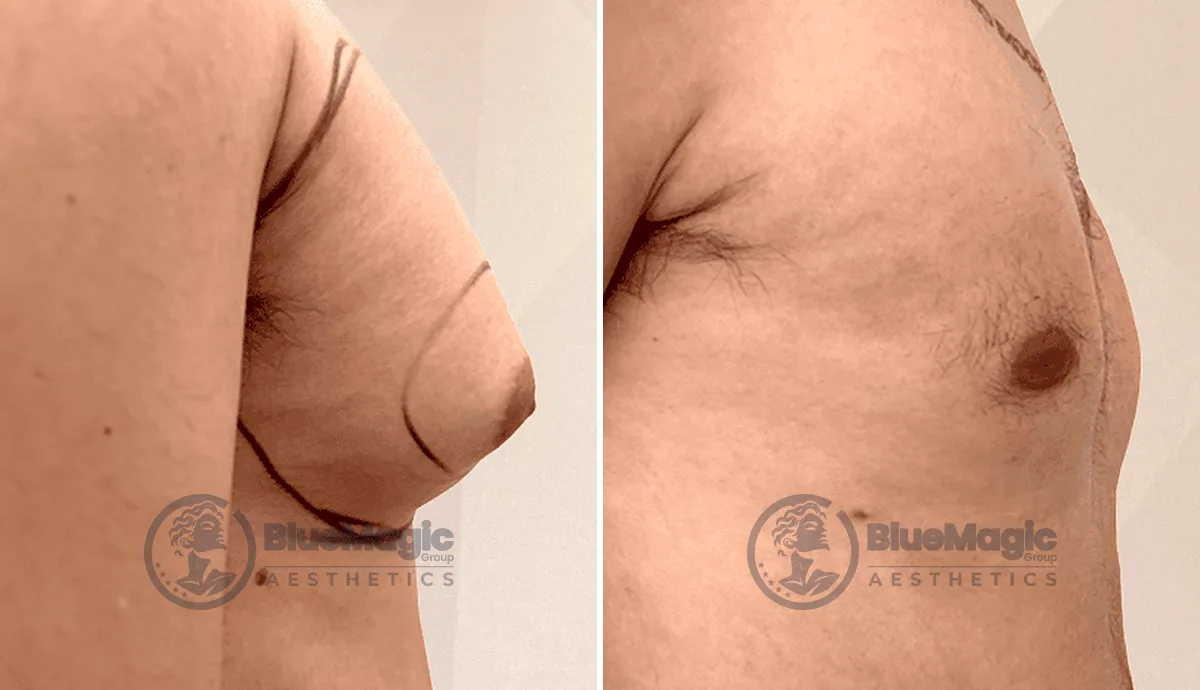
What gynaecomastia is
Gynaecomastia is the enlargement of breast gland tissue in men. It can affect one or both sides and may appear during puberty, in adulthood or later in life. When the enlargement is mainly due to fat, it is called pseudogynaecomastia, or false gynaecomastia.
The causes vary: hormonal imbalances, certain medicines, the use of anabolic steroids, excess weight and sometimes other medical conditions.
In many cases no specific cause is found. That is why, before surgery, the surgeon may ask for tests or a hormone (endocrinology) assessment.
The operation removes the excess tissue with liposuction, by removing the gland through a small incision at the edge of the areola, or with both techniques. Where there is a lot of loose skin, for example after major weight loss, some skin may also need to be removed.
The possible techniques
Chest liposuction
Suitable when fat is the main issue, as in pseudogynaecomastia. It is done through small incisions. Vaser technology can help with the more fibrous tissue of the male chest.
Gland removal
The firmer glandular tissue is removed through a small incision at the lower edge of the areola.
Combined technique
Liposuction and gland removal in the same operation. This is the most common approach for true gynaecomastia.
With skin removal
Where there is a lot of loose skin, for example after major weight loss. It leaves longer scars.
How the operation works
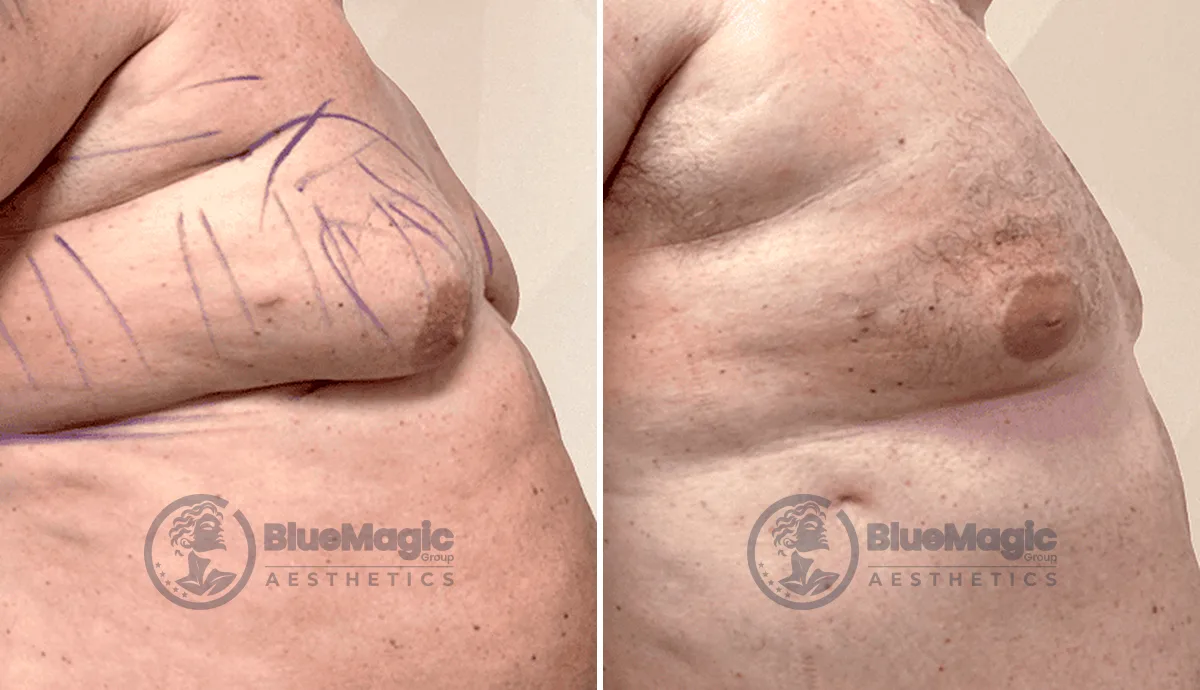
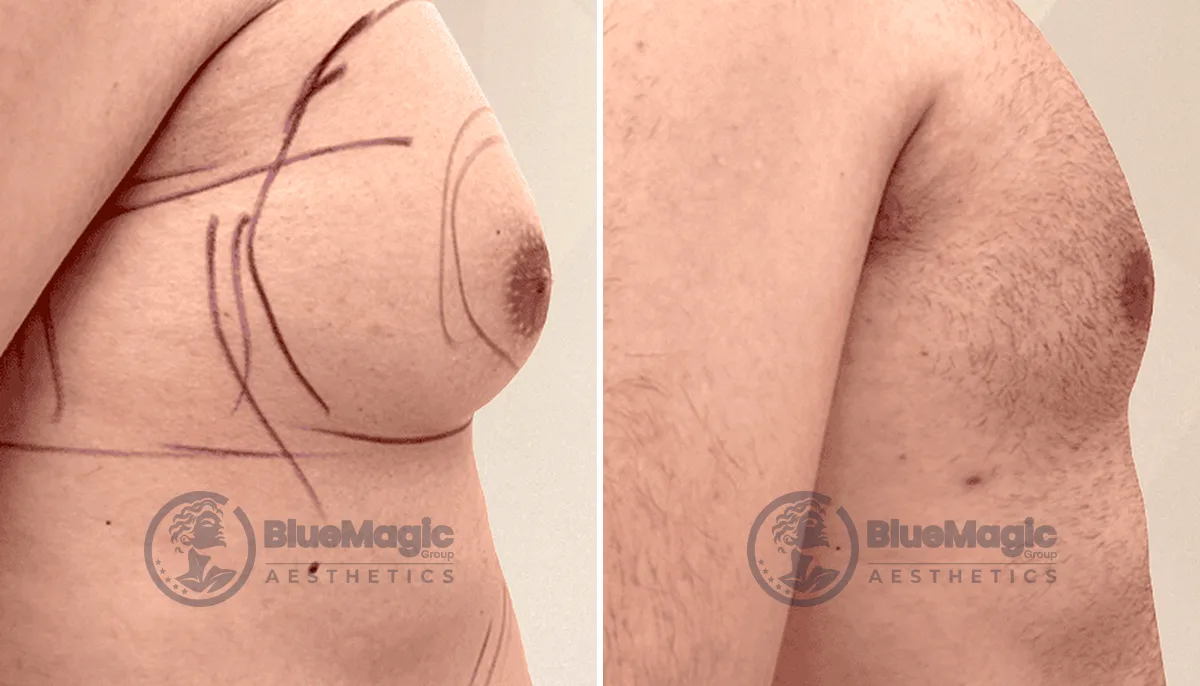
With you standing, the surgeon marks the area to be treated. The operation is usually done under general anaesthesia and generally takes 1–2 hours, depending on the technique.
If there is fat, the surgeon performs the liposuction first, then, where needed, removes the gland through the small incision around the areola, leaving a thin layer of tissue under the areola to avoid a hollow. Drains may be placed.
The tissue removed can be sent for histology, a laboratory examination, at the surgeon’s discretion. At the end of the operation you put on the compression vest.