
What breast reduction is
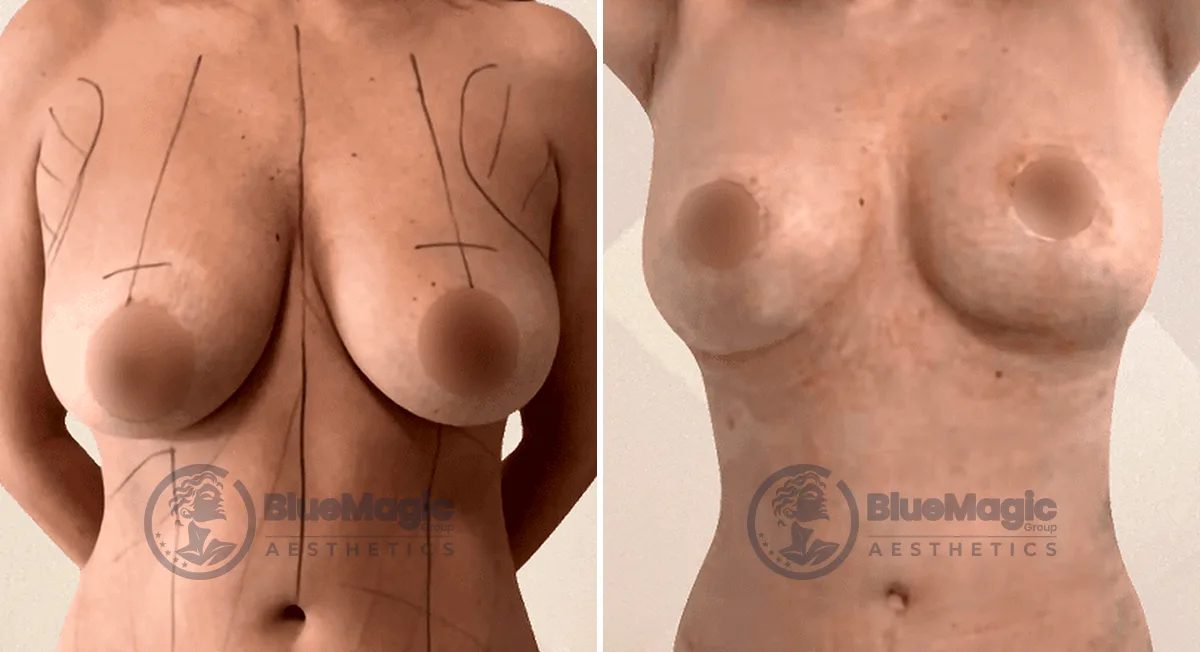
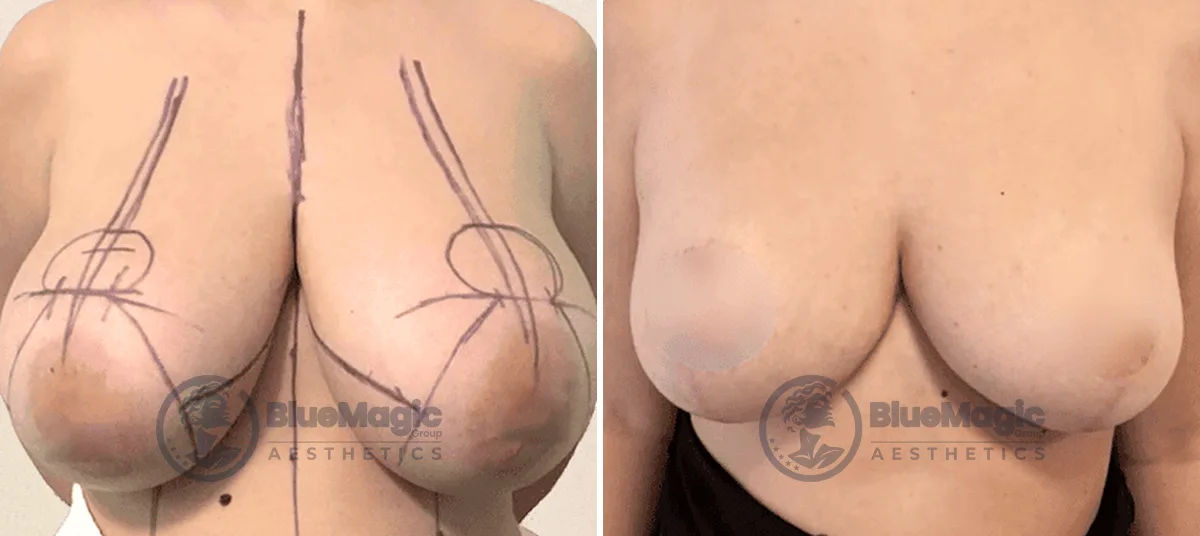
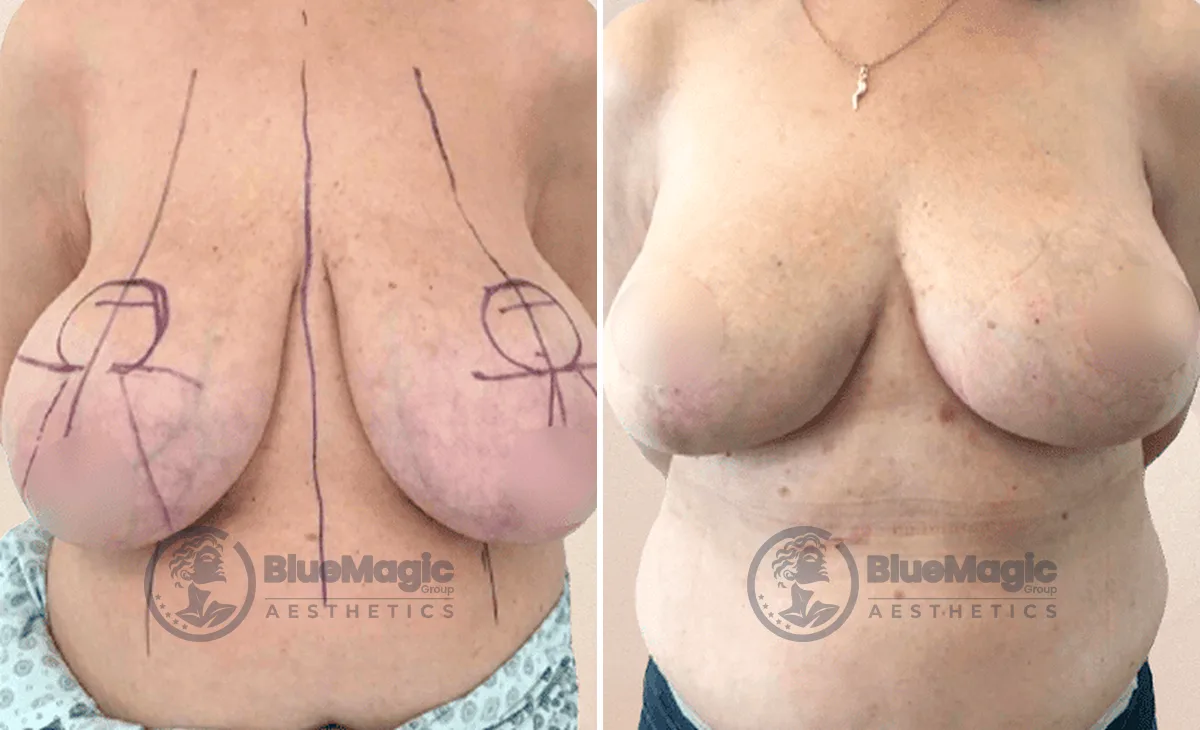
Breast reduction, known medically as reduction mammoplasty, removes part of the breast tissue, fat and skin, with the aim of smaller, lighter and higher breasts. In the same operation the areola is moved upwards and, if needed, reduced in diameter.
For many women it is not only about appearance.
Very large breasts can cause neck, shoulder and back pain, deep grooves from bra straps, skin irritation under the breasts, and difficulty exercising or finding clothes that fit.
The reduction is planned around your figure: the aim is breasts in proportion to your chest and hips, not the smallest possible size. You will discuss this in detail at your consultation with the plastic surgeon.
Techniques and scars
Vertical scar
Around the areola and vertically down to the crease under the breast. Often used for moderate reductions.
Anchor (inverted T) scar
Around the areola, vertically and along the crease under the breast. It allows more skin to be removed and is common in larger reductions.
Reduction with liposuction
In some cases the surgeon may refine the sides of the breast and the area towards the armpit with liposuction.
How the operation works
The operation is carried out under general anaesthesia. Before starting, the surgeon marks the new position of the areola and the incision lines on your skin while you are standing.
Through the incisions the surgeon removes the agreed amount of breast tissue, fat and skin, reshapes the breast and repositions the areola, which in most cases stays connected to its blood vessels and nerves. The reference duration is about 3 hours, but it can be longer for very large breasts.
The tissue removed can be sent for histology, a laboratory examination, at the surgeon’s discretion. At the end of the operation drains may be placed, which come out between day 3 and day 7.